How Managers Can Pilot Generative Media Without Creating Operational Chaos
A useful visual is not simply attractive; it helps a specific audience understand, compare, or act with less confusion. For department heads, marketing managers, and operations leaders, the immediate problem is testing creative AI while maintaining quality, accountability, and predictable costs. A workable approach must preserve context, make revision possible, and keep the audience’s needs ahead of the novelty of the tool.
This article develops that approach through the working principle to define success as a reliable process with named owners and measurable handoffs. An AI Video Maker can support the production stage, but the quality of the result still depends on a clear brief, stable references, and review standards that exist before generation begins.

Understand the Real Communication Constraint
A generative media pilot can look successful after one impressive demo and still fail in routine work. Managers need evidence about repeatability, review time, credit use, file ownership, and the types of tasks that still require specialist judgment. A pilot should therefore test an operating model, not merely a product interface.
The useful question is therefore not whether AI can create an image or clip. It is whether the resulting asset helps the intended reader make the right judgment. In a marketing manager evaluating AI-assisted campaign production for a small team, a responsible workflow defines the decision first, limits the visual claim, and records which elements are authentic, illustrative, or still provisional.
Design a Pilot Around Business Decisions
1. Choose a Bounded Production Task
Select one recurring asset such as a social teaser, product concept image, or internal storyboard. Avoid a flagship campaign where unusual complexity makes the results difficult to generalize. Write the intended decision into the brief and review it again after generation. This simple check prevents visual polish from becoming a substitute for relevance.
2. Assign Ownership at Every Gate
Name the person who writes the brief, approves references, reviews output, checks claims, and authorizes publication. Clear ownership prevents the tool from becoming a shared experiment with no accountable finish line. Keep both rejected and approved versions with short notes. The comparison helps collaborators understand the standard and makes later revisions faster and more consistent.
3. Measure Labor Alongside Credits
Track prompt writing, generation, review, correction, export, and archiving time. Credits are visible, but staff attention often determines whether the new process is genuinely more efficient. Ask a colleague who was not involved in prompting to describe what the result appears to claim. Any gap between that reading and the intended message should be corrected before export.
4. Rehearse the Message With Real Readers
A realistic rehearsal should reproduce the place where the audience will encounter the work. Preview the asset in a feed, article, presentation, or shared review page and invite a small group of department heads, marketing managers, and operations leaders to respond in their own words. Ask what they noticed first, what they believe the visual promises, and what information they still need. Capture those reactions before explaining the intent. This method separates a genuine communication failure from a minor stylistic preference. It is especially useful for a marketing manager evaluating AI-assisted campaign production for a small team, where one missing label or misleading transition can change the practical meaning of an otherwise polished result. Record the resulting decision in one or two sentences, including what changed and why. This prevents the same ambiguity from reappearing during adaptation and gives the final approver a concise explanation of how audience evidence influenced the finished asset.
5. Package the Decisions for Handoff
Create a compact decision record when the asset is approved. Include the communication goal, audience, references, important prompt choices, rejected risks, final export settings, and the location of any authentic evidence used in the piece. Separate reusable style guidance from facts that will expire, such as dates, prices, event details, or product availability. Future creators can then preserve the visual language without copying outdated claims. In a marketing manager evaluating AI-assisted campaign production for a small team, a clear archive also shortens review because stakeholders can see which decisions are settled and which must be revisited for a new channel or campaign. Review the archive after the first real reuse and remove anything that caused confusion. A living handoff record becomes more valuable than a static checklist because it reflects the problems collaborators actually encountered when they adapted, reviewed, or published the work.
Apply the Workflow to a Real Project
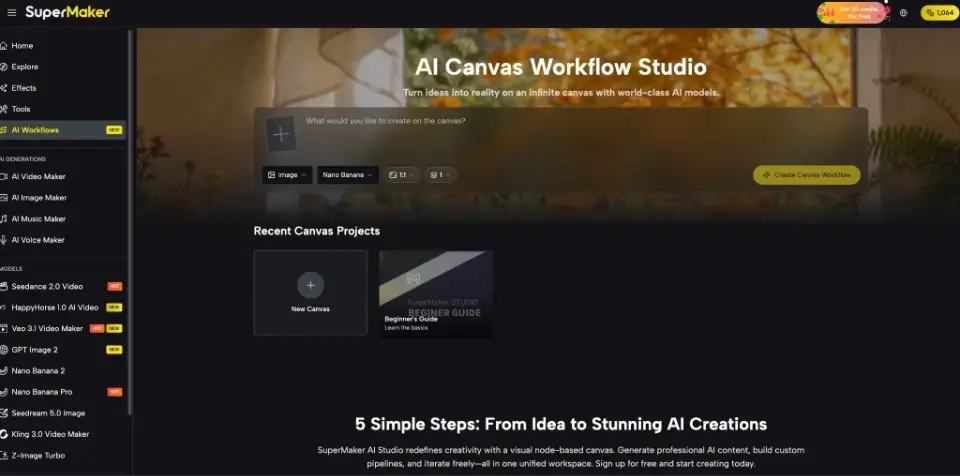
A team can test the AI Video Maker on a fixed brief and record the credits shown before generation, the number of iterations, and the final MP4 handoff. The AI Image Maker can support the reference-frame stage so managers can evaluate whether a connected workflow reduces rework.
Before publishing, review the asset in its final context rather than only inside the generation interface. Check captions, dates, names, logos, factual claims, transitions, and the way the opening frame may be interpreted without sound. Save the approved source and export together so later edits do not quietly replace a verified version with a fresh generation.
Measure the Handoff Not Just Output
Quality control should reflect the environment in which the work will appear. View the asset on a phone, confirm that essential text remains readable, and check whether the first frame still makes sense when separated from the article or campaign around it. If the subject involves a real person, event, product, or measurable result, confirm that the visual treatment does not imply evidence the project does not possess.
The team should also record the practical cost of the final asset: generations used, review time, manual corrections, and any specialist work added after export. In a marketing manager evaluating AI-assisted campaign production for a small team, those notes reveal whether the process can be repeated responsibly. They also help future creators start from an approved brief instead of rebuilding the same decisions from memory.
Good Visual Systems Protect Human Judgment
A useful pilot reveals where generative media fits, where it does not, and which controls the team needs. It should produce an operating decision rather than a collection of attractive samples. The final review should therefore ask not only whether the asset looks finished, but whether its origin, limits, and intended use remain understandable to everyone who handles it.
Managers who measure ownership, labor, and repeatability can adopt creative AI at a pace that improves capacity without weakening standards or obscuring responsibility. Over time, this creates a library of decisions, references, and approved examples that improves consistency without reducing every project to the same visual formula. This discipline also makes future evaluation faster and more defensible.